Northern Michigan winter comes with a lot of gear.
Skis. Snowboards. Boots. Helmets. Sleds. Snowshoes. Winter jackets. Gloves. Goggles. Hockey equipment. Bags full of accessories that seem to multiply every time somebody heads outside.
For a Charlevoix household that actually enjoys winter, the problem usually isn't owning too much winter gear.
It's finding a sensible place to put all of it.
The right storage system keeps equipment dry, organized and easy to grab when the snow is good—without letting winter recreation take over the garage, mudroom or basement.
This guide covers how to organize winter sports equipment during the season, how to prepare it for longer-term storage when spring arrives, and when a small self-storage unit can make seasonal gear considerably easier to manage.
Already running out of room? Check current Charlevoix storage availability and pricing online.
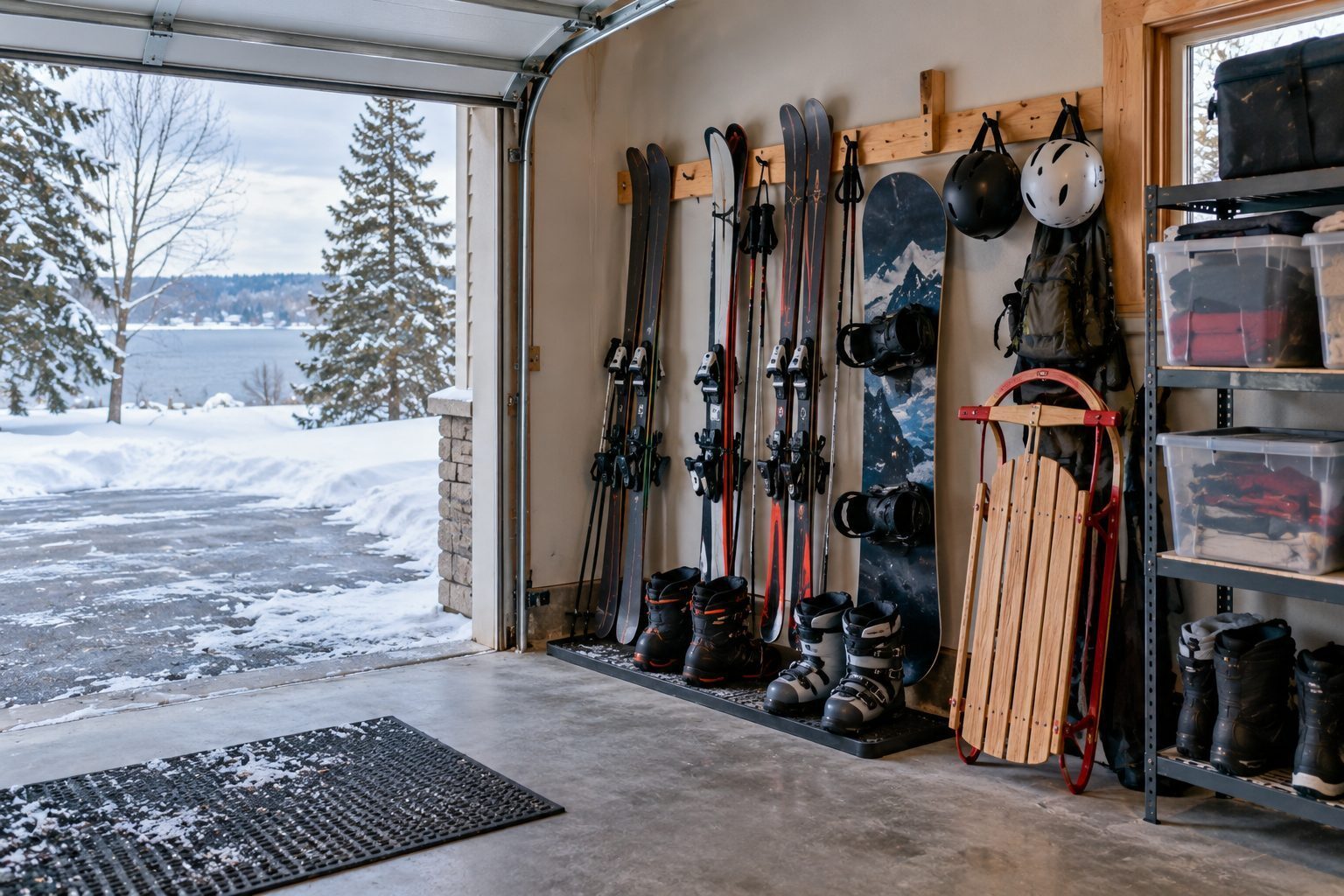
The first thing to recognize is that winter equipment has two very different storage jobs.
During winter, the priority is access. You want skis, boots, helmets and sleds somewhere convenient because they may be used again next weekend—or tomorrow.
During the off-season, the priority changes. Once spring arrives, that equipment may not be touched for six or eight months. At that point, keeping it in prime garage or mudroom space makes much less sense.
A good system handles both.
During ski and snow season, scattered equipment is the enemy.
Instead of keeping boots in one closet, helmets in another and skis leaning against whichever wall was available, designate one area for winter recreation equipment.
A practical gear zone might contain:
The objective is simple: when someone wants to go skiing, you should not have to search three rooms and the back of the garage to find everything.
This is one of the most important habits to get right.
Winter equipment routinely comes home covered in snow and moisture. Putting wet gear straight into a closed tote, equipment bag or tightly packed storage area can trap that moisture.
After use, allow equipment to dry thoroughly before putting it away.
Boot liners, gloves and other removable components should be handled according to the manufacturer's instructions. Skis and snowboards should be wiped down rather than left covered with melting snow.
Storage should happen after drying, not instead of drying.
A pair of skis leaning against a wall seems harmless until there are six pairs, two snowboards and a sled competing for the same corner.
Use a proper rack or another stable storage method designed for the equipment.
Wall storage can be particularly useful because skis and boards are long but relatively narrow. Moving them off the floor preserves valuable garage space while keeping equipment organized.
Whatever system you use, follow the equipment manufacturer's recommendations and make sure the rack supports the gear securely without putting inappropriate pressure on bindings, edges or other components.
Ski and snowboard boots deserve their own space.
After a day outside, open them appropriately and allow moisture to escape before putting them into long-term storage or closing them inside a bag.
A shelf or boot tray near the rest of the winter gear can keep wet boots off the floor while keeping pairs together.
The same principle applies to helmets, gloves and other damp equipment: let things dry before packing them away.
The expensive skis are rarely the thing you lose.
It's the one glove.
Use labeled bins, baskets or bags for smaller equipment such as:
If each family member has substantial gear, consider giving each person a separate labeled container.
That makes getting out the door considerably easier.
Sleds are awkward because they occupy a surprising amount of floor area for something relatively flat.
Where practical, hanging suitable sleds vertically can free up considerable space.
Snowshoes are similarly good candidates for wall storage because they are lightweight and relatively flat.
Again, use a secure system appropriate for the item rather than balancing equipment where it can fall onto a vehicle or person.
During January, skis in the garage make perfect sense.
In July, not so much.
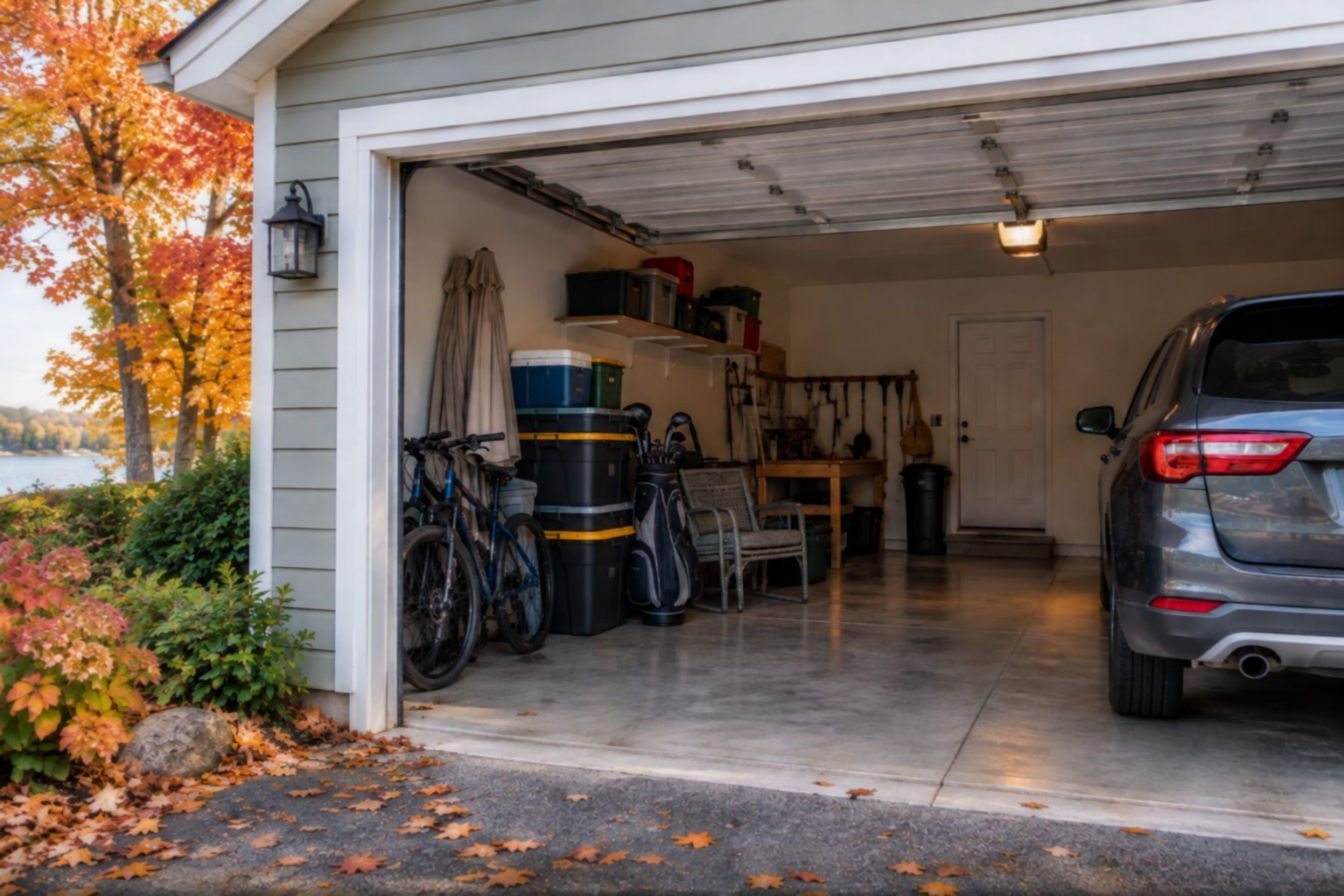
Once the season ends, winter sports equipment competes with bicycles, golf clubs, camping gear, lake equipment, patio furniture and everything else Northern Michigan summer brings back into use.
That is when a seasonal rotation becomes particularly useful.
Instead of asking the garage to hold four seasons of equipment simultaneously, store the things you will not need for several months and bring the current season forward.
We cover the broader garage version of this strategy in our guide to getting your Charlevoix garage ready for winter.
You do not necessarily need a large unit to make a meaningful difference at home.
A small storage unit can become a dedicated home for off-season recreation gear.
In spring, winter equipment goes in.
In fall, winter equipment comes back out and selected summer gear can take its place.
That creates a simple seasonal rotation rather than permanent garage overflow.
For many households, yes.
A 5 x 10 provides approximately 50 square feet of floor area.
That can be useful for skis, snowboards, sleds, labeled equipment totes, bicycles and other seasonal belongings when the space is organized efficiently.
As of September 22, 2026, Charlevoix Mini Storage lists 5 x 10 drive-up units at $60 per month at US-31 South and Old Norwood Road. Old Norwood also has 5 x 10 ground-level hallway storage at $60 per month.
Current inventory is limited on the drive-up version, so use the live rental page rather than assuming a particular unit will remain available.
If winter gear is only part of what you're trying to move out of the garage, a 10 x 10 gives you approximately 100 square feet.
That can make sense when combining recreation equipment with boxes, patio items, bicycles or other household storage.
Current 10 x 10 drive-up units are listed at $89 per month at US-31 South and Old Norwood Road, subject to availability.
For even more seasonal equipment, current 10 x 15 drive-up units are listed at $129 per month.
Our storage unit size guide can help you compare dimensions before reserving.
Skis and snowboards are easy enough to carry. The difficulty comes when they are joined by sleds, bicycles, storage totes and the rest of a family's seasonal equipment.
Drive-up storage lets you position your vehicle close to the unit rather than carrying bulky equipment through a building.
Charlevoix Mini Storage offers drive-up units at US-31 South and Old Norwood Road.
Both facilities provide 24/7 tenant access, so you are not restricted to office hours when retrieving your belongings.
There is no single answer for every piece of equipment.
Many ordinary pieces of properly prepared recreation equipment may be appropriate for standard storage. More sensitive, valuable or temperature-sensitive belongings may warrant a more stable environment.
Always follow the manufacturer's storage recommendations for expensive skis, boards, boots, electronics or specialized equipment.
If you are combining winter gear with items such as wood furniture, electronics, important documents, photographs or other sensitive household belongings, climate-controlled storage may become more attractive.
Charlevoix Mini Storage offers ground-level climate-controlled storage at the US-31 South Business Park.
For a deeper comparison, see our climate-controlled vs. standard storage guide.
Once winter is genuinely finished, do not simply throw the equipment into storage exactly as it came home from the final day of the season.
A good off-season routine includes:
If equipment needs professional tuning or repair, the end of the season can also be a convenient time to address it rather than discovering the problem on the first good snow day next winter.
Winter clothing should be clean and completely dry before long-term storage.
That includes jackets, snow pants, gloves, hats, base layers and other fabric items.
Follow each garment's care instructions, particularly for insulated, waterproof or technical fabrics.
Do not seal damp clothing into a container and expect storage to solve the moisture problem.
Winter equipment becomes much easier to retrieve when containers are specific.
Useful labels might include:
If you have children, adding clothing or boot sizes to the label can be particularly helpful.
By next winter, you can identify what has been outgrown before carrying everything home.
When loading a storage unit in spring, think about the order in which you will want things next fall.
Keep winter equipment accessible if it will be among the first seasonal belongings coming back home.
Leave labels facing outward and, when the unit is sufficiently full, maintain a narrow aisle so you do not have to unload everything to reach one container.
The same principle works in reverse for summer gear.
Sports equipment can represent a meaningful investment, particularly once an entire family's skis, boards, boots and clothing are added together.
Consider how your belongings are financially protected while in storage rather than assuming a homeowners or renters policy automatically provides the coverage you expect.
Charlevoix Mini Storage offers optional tenant protection plans. Review the current terms and compare them with any insurance coverage you already have.
The biggest benefit comes when seasonal storage stops being an emergency cleanout and becomes a normal household routine.
Twice a year, spend an afternoon rotating equipment.
In spring: clean and store skis, boards, sleds and winter gear; bring bikes, golf equipment, camping supplies and summer belongings forward.
In fall: reverse the process.
This approach is particularly well suited to Charlevoix because the way we use our garages, cottages and outdoor equipment changes dramatically throughout the year.
Properly prepared skis, snowboards and similar recreation equipment can be suitable for storage. Clean and dry equipment thoroughly, follow the manufacturer's recommendations and consider the appropriate storage environment for valuable or sensitive gear.
Allow skis to dry after use and keep them securely organized rather than leaving wet equipment piled together. Use a storage method appropriate for the skis and follow the manufacturer's recommendations.
Boots should be clean and dry before storage. Allow moisture to escape after use and follow the manufacturer's guidance for liners, buckles and long-term storage.
A 5 x 10 can be a useful starting point for skis, snowboards, sleds, bicycles and storage totes. A 10 x 10 provides more flexibility when combining sports equipment with furniture, boxes or other seasonal household belongings.
As of September 22, 2026, 5 x 10 drive-up units at Charlevoix Mini Storage are listed at $60 per month at US-31 South and Old Norwood Road. Old Norwood's 5 x 10 hallway units are also currently $60 per month. Prices and availability change, so check the live rental page.
Yes. Charlevoix Mini Storage tenants have 24/7 access to their rented storage space. Published office hours apply to leasing and customer service rather than normal tenant access.
Yes. Available units can be reserved online. The current reservation payment is $30; it holds an available unit for up to 14 days and is applied to the first rental invoice when move-in is completed within that period.
Living in Charlevoix means the equipment changes with the weather.
Skis and snowboards replace bikes and golf clubs. Sleds replace beach gear. Heavy winter clothing appears just as summer equipment needs somewhere to go.
The solution does not have to be a bigger garage.
A good organization system—and, when needed, a small seasonal storage unit—can keep the gear you actually use close at hand while moving the rest out of the way until its season returns.
Charlevoix Mini Storage offers drive-up, hallway and climate-controlled storage across four local facilities, with 24/7 tenant access and online reservations.
Check current Charlevoix storage availability and reserve online, or contact our local Charlevoix office if you'd like help choosing a unit.
You can also call us at (231) 547-5838.
Last updated: September 22, 2026. Prices and availability are subject to change. The live rental page is the current source for available units and pricing.
